The Sensor-Agnostic Cold Chain Monitoring Guide
Every temperature excursion is more than a “logistics event.”
It’s a patient-impact event waiting to surface later—failed QC, retesting, redraws, delayed therapy, and compliance headaches.
Most teams already know they need cold chain monitoring. The harder question is: How do you reduce excursions and prove compliance without adding yet another layer of device sprawl, vendor lock-in, and manual reporting?
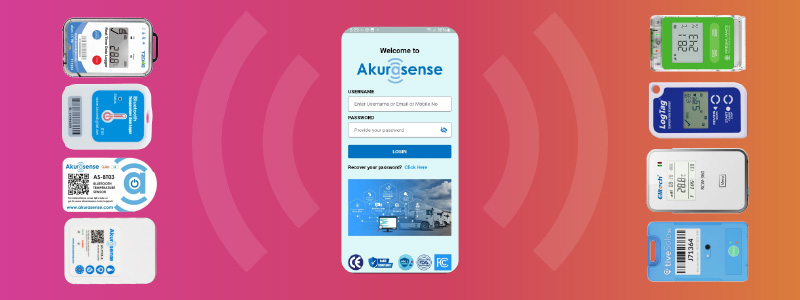
This guide focuses on the model that’s increasingly winning in healthcare logistics: sensor-agnostic cold chain visibility—one platform that can ingest data from multiple sensor brands, sensor types, and connectivity modes (Bluetooth / 4G / Wi-Fi), across both fixed assets (freezers and cold rooms) and mobile assets (courier totes, shippers and vehicles).
Cold chain monitoring is not just temperature logging anymore
Traditional “monitoring” often meant downloading a PDF after the trip and filing it away.
Modern cold chain monitoring is closer to continuous risk management:
- Instrument the journey (fixed + mobile)
- Detect risk early (in-transit and at handoffs)
- Trigger response workflows (who gets notified, when, and what action is logged)
- Produce audit-ready records without manual effort
Even general industry guidance recognizes that cold chain monitoring typically includes sensors, centralized data collection/analytics, real-time alerts, corrective actions and audit trails.
And in regulated environments, the “audit trail” isn’t optional—monitoring systems are expected to document temperature-related activities and corrective actions to support traceability and compliance.
The real problem: your cold chain data is fragmented
Healthcare cold chains break quietly because monitoring is usually fragmented across:
- multiple device types (single-use loggers, reusable loggers, real-time trackers)
- multiple brands (procurement-driven substitutions happen constantly)
- multiple workflows (drivers do one thing, lab does another, QA reconciles later)
- multiple portals/spreadsheets (each vendor “solves” one slice)
So you end up with:
- inconsistent SOPs across sites
- gaps in chain-of-custody across handoffs
- delayed escalation (post-mortem vs in-transit intervention)
- excessive manual reporting and duplicate entry
“What’s the best way to monitor both fixed… and mobile assets… using sensor devices from different manufacturers on one platform?”
Why “device-locked” monitoring quietly drives cost and risk
A device-locked approach (platform only works with Vendor X devices) creates problems that grow with scale:
Procurement volatility becomes an operations problem
If a device is backordered, discontinued, or restricted by geography, operations teams get forced into:
- switching device models mid-program
- running two systems in parallel
- delaying rollout timelines
You pay twice: once for devices, again for complexity
Even when device pricing is “fine,” teams bleed budget through:
- training time (different apps, different steps)
- exception handling (missing trip logs, mismatched IDs)
- manual QA work (pulling reports from multiple places)
- audits (reconstructing chain-of-custody across systems)
The sensor-agnostic model: how it works
A sensor-agnostic cold chain monitoring platform is built to do three things well:
- Ingest data from multiple sensor brands (multi-OEM)
- Normalize that data into one operational truth (assets, trips, locations, thresholds, alerts)
- Trigger consistent workflows and reporting, regardless of sensor choice
Multi-sensor and multi-brand integration: the hidden superpower
“Sensor-agnostic” isn’t only about having options. It’s about operating a cold chain that behaves consistently even when sensors vary.
A unified platform lets you standardize around outcomes, not devices:
- same traceability of calibration certificates
- same trip workflow
- same temperature safe-range logic
- same escalation policy
- same reporting format
- same chain-of-custody record structure
So your SOPs don’t collapse every time procurement changes a device supplier.
“Multi-sensor data” improves interpretation
Different routes and risks call for different telemetry:
- Who has custody of parcel
- Temperature & humidity (common baseline)
- Location stamps (to understand handoffs and dwell times)
- Shock/light (when relevant to product sensitivity and packaging integrity)
A practical TCO lens
Most teams underestimate Total Cost of Ownership because they only compare:
- platform subscription vs platform subscription
- device price vs device price
Real TCO = device ecosystem + operational labor + compliance overhead + avoidable loss.
What device pricing variability looks like in the real world
Just to illustrate how wide pricing and sourcing can be across device categories:
- A single-use temp + RH data logger is generally listed at $49, with volume pricing dropping to $40 at 500+ (example: tempmate-S2H retailer listing).
- A disposable temp/RH logger product page shows €32 list price, with volume pricing as low as €18.40 at 1000 units.
- A real-time wireless data logger (cellular-enabled class) is listed at $191.80 (example: ELPRO LIBERO GL retailer listing).
Those numbers aren’t “the market.” But they clearly show the reality: Sensor costs vary widely by category, supplier, region, and MOQ.
Why sensor-agnostic platforms reduce TCO (even when devices cost the same)
A sensor-agnostic platform protects you from cost spikes and substitutions because you can:
- migrate existing loggers instead of replacing
- shift device choices per route (Bluetooth vs 4G vs Wi-Fi) without changing the platform
- avoid dual systems during transitions
- keep consistent training + workflows across sites
In other words: sensor-agnostic is less about “cheaper sensors,” more about lower rollout friction and lower operational drag.
Fixed + mobile monitoring in one system
Many organizations monitor:
- storage (freezers/cold rooms) separately
- transportation (courier totes/shippers) separately
But the risk lives in the handoff points—doors opening, loading delays, vehicle dwell times, missed scans, “who touched it last.”
Akurasense® offers a single platform to monitor both fixed and mobile assets, and digitizes chain-of-custody and reporting—especially for medical courier operations.
That unified view enables:
- fewer “unknowns” between origin → transit → destination
- faster root cause analysis (route? packaging? handling? equipment?)
- consistent corrective action logging
Compliance and audit readiness: simplify the evidence trail
For regulated teams, a monitoring program fails if it can’t reliably produce evidence. In FDA contexts, 21 CFR Part 11 is the baseline framework for controls around electronic records and electronic signatures. The bigger message: Make audit readiness a default output of daily operations.
What to look for in a sensor-agnostic platform
Use this as a decision checklist when evaluating platforms like Akurasense— that are focused on business risk, continuity, and operational simplicity, not just technical architecture.
Dependency & Continuity Risk
- Are you dependent on a single vendor and/or a single device ecosystem for critical cold chain monitoring?
- What happens if that vendor has downtime, changes device models, updates their application, shifts pricing, or limits availability in your region—or if their organization changes direction?
Risk Hedging Without Operational Complexity
- Do you have a way to maintain 3–4 “risk-hedging” options (alternate sensor providers or device categories) so your monitoring program doesn’t stall due to supply or vendor issues—without creating more portals, more workflows, or more training overhead?
- Can your monitoring approach feel like one unified back-office—where the complexity of managing multiple providers is handled in the background (platform automation, standardized workflows, or even “AI-agent-like” assistance), so your teams stay focused on operations and quality?
Fit With Your Current and Future Sensor Strategy
- Does the platform support your present inventory of sensors, so you can reuse what you already own instead of replacing devices to fit the software?
- If your current devices can’t be supported, does the platform offer an equivalent alternative—so you can switch without sacrificing data continuity, SOP consistency, or compliance reporting?
Operations workflows
- Trip start/stop workflow for couriers (simple, repeatable)
- Asset assignment and lifecycle tracking (which sensor is on which tote/shipper)
- Exception handling (missed scans, disconnected device alerts)
Alerts + corrective actions
- Real-time excursion alerts with escalation rules
- Audit logs of who acknowledged and what action was taken (defensible evidence)
Reporting + analytics
- Automated compliance reports (reduce manual labor)
- Route intelligence (spot repeat failures, improve SOPs)
Security + compliance
- Role-based access and controlled change management
- Part 11-aligned controls when needed (Source: U.S. Food and Drug Administration)
The Solution
Akuratemp’s Akurasense® is designed to link sensors directly to fixed and mobile assets on one platform, automate reporting for compliance, and enable proactive notifications—while supporting different sensor connectivity needs (Bluetooth/4G/Wi-Fi).
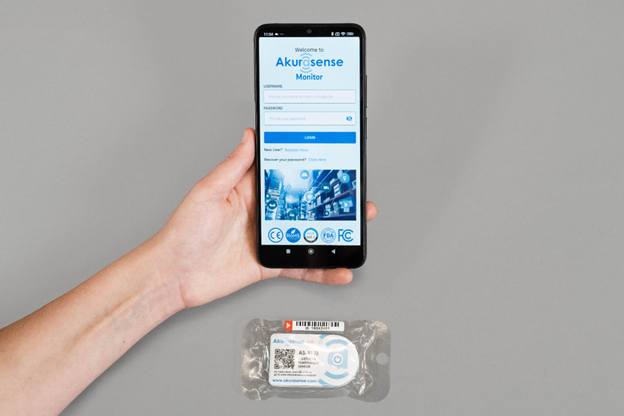
Akuratemp’s Akurasense® digitizes each cold chain asset for traceability over the asset’s life-cycle, it turns that route-and-pattern intelligence into something teams can actually operationalize: it unifies time-stamped temperature/RH telemetry, location context, and chain-of-custody events across both fixed and mobile assets, even when you’re using different sensor brands and connectivity modes.
Instead of chasing scattered trip files and vendor portals, teams get a single, audit-ready view that makes patterns visible—recurring dwell-time hotspots, handoff delays, route segments that correlate with excursions, and partners or sites where data quality breaks down.
The result is faster, more confident corrective action: tighten SOPs per route or trip patterns, standardize escalation policies, and continuously improve performance without adding headcount or locking your program to one device ecosystem.
Want to reduce your monitoring complexity across sensors, routes, and partners? Book a no-cost conversation today.