Protect Every Cold-Chain Handoff Beyond the Hospital
Extend temperature control and operational visibility across specimen collection, hospital storage, courier movement, inter-facility transfers and patient-connected workflows - without forcing teams to replace the systems that already work.
Hospital Cold Chains Extend Far Beyond Refrigerators
Hospitals manage temperature-sensitive materials in many different environments: laboratories, collection areas, pharmacies, procedural departments, loading docks, courier vehicles, off-site facilities and patient homes. The controlled environment inside a refrigerator or freezer is only one part of that journey.
Risk often increases during the transitions between these environments. A specimen may sit in a collection area before pickup. A courier tote may move through several stops. A therapy or sample may leave the hospital for a patient or another facility. When packaging, monitoring and handoff practices vary, it becomes harder to know whether the required condition was maintained and where an exception actually occurred.
Cold-Chain Challenges Hospitals Commonly Face
Handoffs Between Departments and Partners. Specimens and other temperature-sensitive materials can move through multiple departments, collection points, couriers and receiving teams, creating gaps in accountability and visibility.
Variation Across Facilities. A health system may have hospitals, outpatient centers, physician offices, draw sites and partner laboratories that use different transport assets, sensors, pack-out practices or escalation procedures.
Specimen Risk Before Laboratory Receipt. Pre-analytical handling, dwell time, storage conditions and transport can affect specimen integrity before testing even begins.
Limited Visibility Outside Fixed Storage. A hospital may monitor refrigerators and deep freezers well while having less consistent visibility once a specimen, reagent or therapy leaves a controlled department.
Manual Exception Investigation. When something goes wrong, operations and quality teams may need to reconstruct temperature records, handoffs, time stamps and asset history from multiple sources.
Reusable Asset Accountability. Courier totes, lockboxes, sensors, specialty shippers and other reusable assets can become difficult to manage across departments, facilities and logistics partners.
Home and Outreach Workflow Complexity. Home collection, outpatient programs and remote patient services extend hospital cold-chain responsibilities into environments with greater operational variation.
How Akuratemp Helps Hospitals
Akuratemp helps hospitals improve cold-chain performance through four connected capabilities: protect temperature-sensitive materials, see what is happening across the journey, standardize critical workflows and improve recurring problem areas.
- Protect: Use validated temperature-controlled shippers, courier totes and PCM-based systems designed around the temperature range, duration and operating environment of the movement.
- Monitor: Use Akurasense® to connect temperature,RH, Light & Shock along with time, location, asset and custody-related information across mobile and fixed cold-chain workflows.
- Standardize:Create more consistent pack-out, storage, pickup, handoff, receiving, escalation and return-to-service practices across hospital sites and logistics partners.
- Improve: Use operational data together with Optimyz℠ process optimization to investigate recurring exceptions and determine whether packaging, assets, timing or workflow is contributing to risk.
Recommended Akuratemp Solutions for Hospitals
Akurasense® Cold Chain Operational Intelligence Platform | S.M.A.R.T. Medical Courier Totes | S.M.A.R.T. Patient-to-Lab Sample Shippers |
| Bring temperature,RH, Light & Shock Excursions along with time, location, asset and chain-of-custody-related data into a more consistent operating view across hospital transport and storage workflows. Akurasense can support both mobile and fixed assets and a sensor-agnostic monitoring strategy. Best suited for: Hospital-wide visibility, exception investigation, asset oversight, automated evidence and multi-site cold-chain operations. | Validated reusable courier totes designed for routine healthcare transport where specimens or other temperature-sensitive materials move between hospitals, outpatient sites, clinics and laboratories. Best suited for: Hospital-to-lab movements, outreach collection, multi-stop courier routes and recurring inter-facility transport. | Temperature-controlled specimen shippers designed to protect samples from patient or collection point through laboratory receipt, with monitoring options that support traceability and review. Best suited for: Home collection, outpatient draw programs, remote collection and controlled specimen return. |
S.M.A.R.T. Medical Home Care Totes / Direct-to-Patient Solutions | S.M.A.R.T. Validated Parcel Shippers | Optimyz℠ Cold Chain Process Optimization |
| Portable temperature-controlled systems for healthcare workflows that extend into the patient environment, supporting movement of temperature-sensitive samples, therapies or related materials outside traditional facilities. Best suited for: Home health, decentralized care, direct-to-patient programs and field-based clinical workflows. | Reusable PCM-based parcel shippers for longer-distance or carrier-based movements where defined temperature protection is required beyond a local courier route. Best suited for: Inter-facility transfers, reference-lab shipments, specialty sample movement, reagents and other temperature-sensitive healthcare materials. | A continuous-improvement service that uses process analysis and operational data to help identify recurring excursion sources, workflow variation and avoidable cold-chain risk. Best suited for: Hospitals or health systems seeking to improve an existing cold-chain program rather than simply add more monitoring. |
What Hospitals Can Improve
- More Reliable Specimen Transport. Create more consistent temperature protection and handling across collection, transport and receiving workflows.
- Better Visibility Between Facilities. Understand what happens after a specimen or material leaves one controlled environment and before it enters the next.
- Faster Exception Investigation. Bring together the operational evidence needed to understand when and where an issue occurred instead of reconstructing the journey manually.
- More Consistent Turnaround Performance. Identify dwell, pickup, transport and handoff conditions that may contribute to delays, escalations or avoidable repeat work.
- Better Asset Utilization. Improve accountability for reusable totes, shippers, sensors, lockboxes and other cold-chain assets across departments and facilities.
- More Consistent Outreach and Home Workflows. Extend standardized temperature-control practices beyond the hospital campus to outpatient, home-care and remote collection environments.
- Audit-Ready Evidence as a By-Product. When operational data is captured consistently, temperature records, alerts, calibration information, proof of delivery, handoff evidence and trip history can also support quality reviews and audit requirements with less manual effort.
Where Akuratemp Fits in the Hospital Cold Chain
| Workflow Stage | Operational Need | Akuratemp Fit |
| 1. Patient / Collection Point | Specimen collected in the hospital, clinic, outpatient center or patient home. | Patient-to-Lab Shipper / Home Care Tote |
| 2. Temporary Storage | Material may wait in a lockbox, refrigerator, freezer or staging area before movement. | Akurasense fixed-asset monitoring |
| 3. Pickup & Handoff | Specimen or material is transferred to an internal runner, medical courier or logistics partner. | Akurasense custody-related visibility |
| 4. Controlled Transport | Temperature-sensitive material moves by courier route or parcel shipment. | S.M.A.R.T. Courier Tote / Validated Parcel Shipper + Akurasense |
| 5. Receiving | Laboratory, pharmacy or destination team receives and reviews the material. | Trip history, alerts and operational evidence |
| 6. Continuous Improvement | Recurring events are analyzed to improve packaging, assets, timing and workflow. | Akurasense analytics + Optimyz |
Build on the Hospital Infrastructure You Already Have
Improving cold-chain operations does not necessarily mean replacing every refrigerator, freezer, sensor, tote, shipper or logistics partner already in use.
Akuratemp can help hospitals identify where existing controls are sufficient and where additional temperature protection, operational visibility, asset accountability or workflow standardization could make the greatest difference. Akurasense is designed to support a sensor-agnostic approach, which can help organizations create a more consistent operational layer across diverse cold-chain assets and workflows.
Common Hospital Use Cases
- Specimen transport from hospital departments to an on-site or external laboratory
- Hospital-to-reference-lab shipments
- Outpatient clinic and physician-office specimen pickup
- Multi-stop medical courier routes across a health system
- Inter-facility sample, reagent or therapy transfers
- Home collection and home-care specimen transport
- Direct-to-patient temperature-sensitive healthcare programs
- Lockbox, refrigerator and freezer monitoring
- Reusable courier tote and shipper accountability
- Temperature-excursion investigation and root-cause analysis
- Calibration certificate and operational evidence management
- Standardization of cold-chain practices across multiple hospital sites
- Continuous improvement of transport and handoff workflows
Why Hospitals Work With Akuratemp
Akuratemp brings physical cold-chain protection, digital operational intelligence and process-improvement expertise together. Hospitals can therefore address packaging, monitoring, asset visibility and workflow performance as connected parts of the same operating problem.
- Validated temperature-controlled packaging designed for healthcare logistics
- Reusable transport systems suited to recurring hospital and courier workflows
- Sensor-agnostic operational intelligence through Akurasense
- Visibility across mobile and fixed cold-chain assets
- Support for patient-to-lab, inter-facility and home-connected workflows
- Operational evidence that can also support quality and audit needs
- Continuous-improvement support through Optimyz
- Ability to complement existing infrastructure rather than forcing wholesale replacement
Find the Gaps Between Your Controlled Environments
Your hospital may already have validated storage, established courier partners, temperature sensors and detailed SOPs. The opportunity is to understand what happens between those controls – during collection, staging, pickup, transport, handoff and receipt.
Talk with Akuratemp about the workflows you manage today. We can help identify where improved temperature protection, visibility or process standardization could create the greatest operational value without adding unnecessary complexity.

What will pharma cold-chain leaders be talking about at LogiPharma USA 2026? Akuratemp is heading to Boston with two focused conversations: helping 3PL organizations improve cold-chain visibility, asset utilization and custody evidence through Akurasense®, and helping temperature-controlled packaging manufacturers strengthen PCM supply with savENRG®.
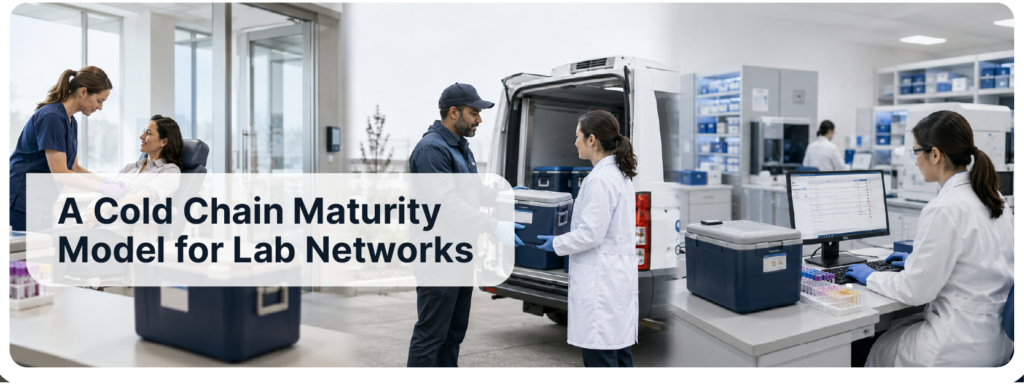
Most lab networks do not begin with a cold-chain operating model. They begin with practical needs. A collection site needs specimens picked up. A courier route needs a temperature-controlled tote and a logger. A lab adds a shipping SOP. A customer asks for proof of control. A compliance team wants […]
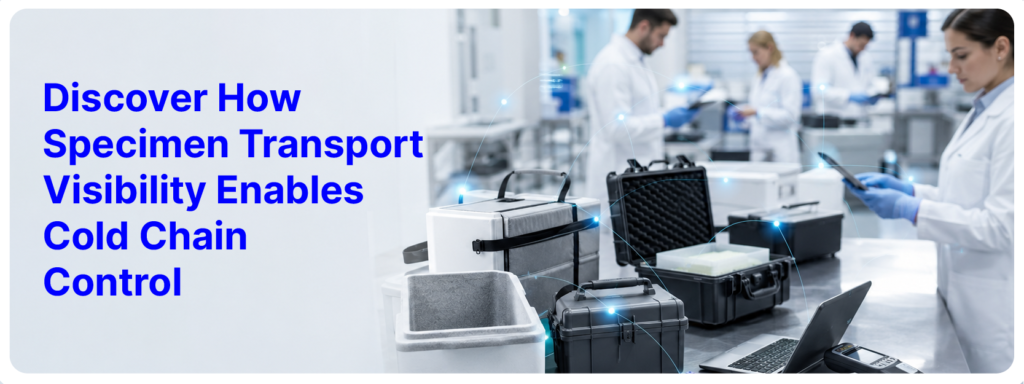
In diagnostic logistics, cold chain risk rarely starts with one dramatic failure. It usually starts with small moments that are easy to miss. For clinical laboratories, courier networks, and healthcare logistics teams, these moments are not just cold chain issues. They are operational issues. They affect timely diagnostics, specimen integrity, […]
FAQs
How can hospitals improve visibility across specimen transport workflows?
Hospitals can improve visibility by connecting temperature, time, location, asset and handoff information across collection points, storage, courier movement and receiving. This helps teams understand what happened between controlled environments and where recurring operational risks appear.
Can Akuratemp support an existing hospital courier or sensor program?
Yes. Akuratemp can complement existing cold-chain infrastructure. Akurasense is designed to support a sensor-agnostic approach using RESTful & Webhook apart from its bucket of OEM Suppliers already being available on the platform, while validated Akuratemp transport solutions can be introduced where additional temperature protection or workflow consistency is required.
Which Akuratemp solutions are most relevant for hospitals?
Common solutions include S.M.A.R.T. Medical Courier Totes, Patient-to-Lab Sample Shippers, home-care or direct-to-patient temperature-controlled systems, validated parcel shippers, Akurasense Cold Chain Operational Intelligence Platform and Optimyz Cold Chain Process Optimization.
How does Akuratemp help hospitals investigate temperature excursions?
Validated packaging helps protect required temperature conditions, while Akurasense can provide operational evidence around temperature, time, location and assets. Optimyz can then help teams analyze recurring causes and improve the underlying workflow.
Can Akuratemp help with hospital cold-chain quality and audit evidence?
Yes. Consistently captured operational data can support temperature records,RH, Light & Shock Excursions along with alerts, calibration information, proof of delivery, handoff evidence and trip history used in quality reviews and audit preparation. Akuratemp positions this evidence as an additional benefit of better day-to-day cold-chain operations.
Does Akuratemp support hospital-at-home or home collection workflows?
Akuratemp offers temperature-controlled solutions that can support patient-connected and field-based healthcare workflows, including controlled specimen return and other temperature-sensitive movements outside traditional facilities.