Precision PCM Packs for Healthcare Cold Chains
Protect temperature-sensitive specimens, biologics, pharmaceuticals, and other healthcare payloads with PCM packs engineered for defined temperature ranges.
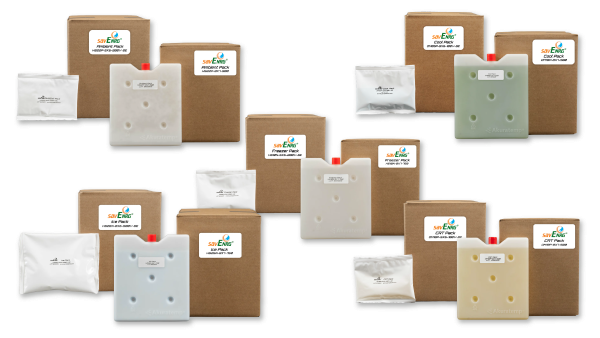
What Are Phase Change Materials?
Phase Change Materials (PCMs) absorb, store, and release thermal energy as they change between solid and liquid states. Because each PCM is formulated to change phase around a defined temperature, it can help hold a payload closer to its required range than a one-temperature-fits-all refrigerant.
In healthcare cold chains, PCM packs are used inside insulated shippers, medical courier totes, collection kits, and other temperature-controlled packaging. The right PCM can help reduce the risk of both overheating and overcooling while supporting more consistent, repeatable packout procedures.
Explore the savENRG® PCM Pack Range
The savENRG® portfolio covers deep-frozen, frozen, refrigerated, controlled-room-temperature, and ambient applications. Select a category below to review available pouch and bottle formats, product specifications, data sheets, handling instructions, sample sets, and ordering options on PCMpacks.com.
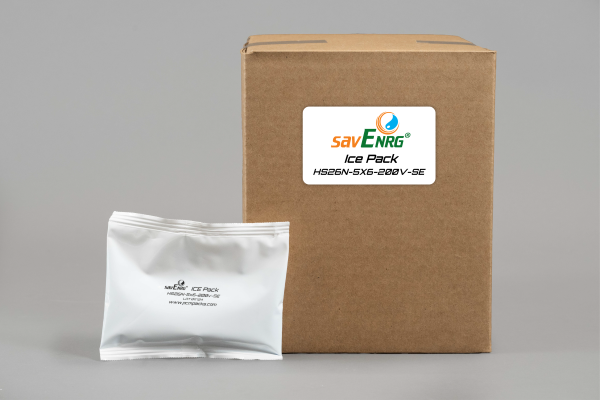
Ice Packs
For frozen applications that need temperatures below -20°C. These salt-hydrate-based PCM packs provide a reusable alternative to dry ice for suitable validated applications.
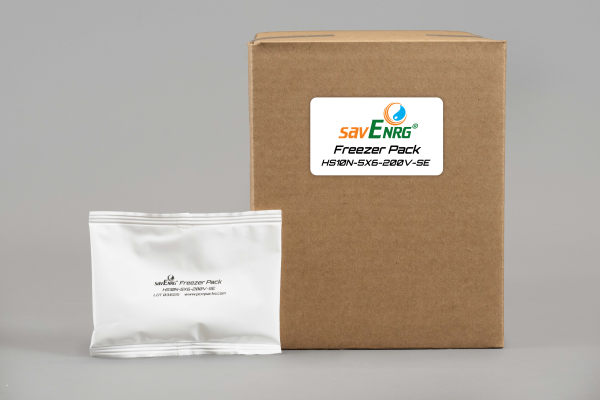
Freezer Packs
Made with a water-based PCM for frozen transport, these packs are designed to maintain payloads below 0°C and provide reliable temperature control in the -5°C to -10°C range.
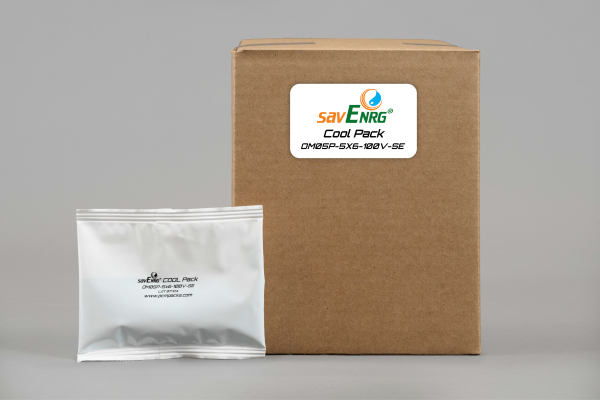
Cool Packs
Formulated for refrigerated shipments, Cool Packs are designed to support the 2°C to 8°C range while reducing the overcooling risk that can arise when a 0°C gel pack is used.
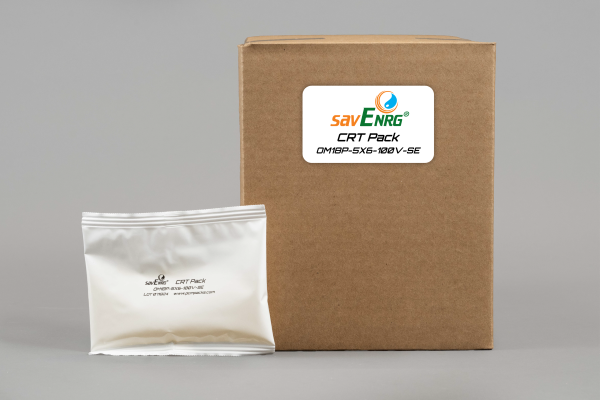
CRT Packs
Designed for controlled-room-temperature applications where the priority is to keep sensitive payloads above +15°C and reduce the risk of overcooling during transit.
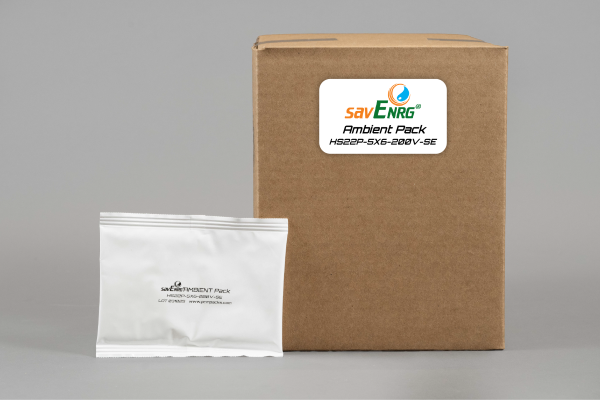
Ambient Packs
Water-based Ambient Packs are are made with non-toxic, inorganic & non-flammable PCM designed for room-temperature shipments that need protection across the broader 15°C to 25°C range.
PCM Pack Quick Selection Guide
| Transport need | PCM family | Phase-change point | Typical healthcare applications |
| Below -20°C | Ice Packs | -26°C | Plasma, frozen biological samples, selected vaccines |
| Frozen; typically -5°C to -10°C | Freezer Packs | -10°C | Embryo biopsy samples, plasma, selected vaccines |
| Refrigerated; 2°C to 8°C | Cool Packs | +5°C | Blood products, biological samples, vaccines, reagents |
| Controlled Room Temperature (CRT); 15°C to 20°C | CRT Packs | +18°C | Specialty pharmaceuticals, biological samples, reagents |
| Ambient; 15°C to 25°C | Ambient Packs | +22°C | Blood specimens, platelets, medications, diagnostic kits |
Selection guidance: This overview is not a substitute for payload-specific stability requirements, packaging qualification, route testing, or validated packout instructions.
Why Choose PCM Packs?
- Temperature-specific formulations. Choose from -26°C, -10°C, +5°C, +18°C, and +22°C phase-change points instead of relying on one generic gel pack across very different payload needs.
- Reusable thermal media. Product families are designed for repeated use and tested for performance stability over multiple freeze-thaw cycles, supporting more consistent packouts and lower packaging waste in suitable closed-loop programs.
- Multiple formats and capacities. Product pages list pouch and bottle options in different PCM weights, along with case quantities and sample-set availability.
- Supporting documentation. Product pages provide access to specifications, product data sheets, safety data sheets, technical data sheets, and handling instructions.
- Built for real cold-chain workflows. The range supports laboratories, pharmaceutical and vaccine manufacturers, medical couriers, specialty pharmacies, reagent manufacturers, and other temperature-controlled operations.
Choose the Pack Around the Workflow
- 1
Confirm the payload requirement
Use the approved storage and transport range for the specific specimen, medication, biologic, vaccine, or reagent - not a generic sample-type assumption.
- 2
Define the shipping Route
Consider expected duration, seasonal ambient exposure, dwell points, courier handoffs, and the consequences of a delay.
- 3
Match the complete packout
PCM type, quantity, conditioning method, insulation, payload volume, and pack placement all affect thermal performance.
- 4
Validate before deployment
Qualify the full packaging system and document the operating procedure before using it in routine shipments.
Find the Right PCM Pack
Tell us what you are shipping, the required temperature range, expected transit duration, and the packaging format you use today. We will help you identify the most relevant product family, supporting documentation, sample option, or order path.
Frequently Asked Questions
What is the difference between a PCM pack and a standard gel pack?
A standard water-based gel pack typically freezes and melts around 0°C. A PCM is formulated to change phase around a selected temperature, allowing the refrigerant to be matched more closely to frozen, refrigerated, CRT, or ambient payload requirements.
Which PCM pack should I use for 2°C to 8°C shipments?
savENRG® Cool Packs use a +5°C phase-change material and are the product family intended for refrigerated 2°C to 8°C applications. The complete packout must still be qualified for the payload, shipper, lane, duration, and ambient profile.
What is the difference between CRT Packs and Ambient Packs?
CRT Packs use a +18°C phase-change material and are designed to help keep sensitive loads above +15°C, with a stated operating range of +15°C to +20°C. Ambient Packs use a +22°C phase-change material for the broader +15°C to +25°C room-temperature range.
Can savENRG® PCM Packs be reused?
Yes. The product families are designed as reusable thermal media and are tested for repeated thermal cycling. Reuse should follow the applicable inspection, cleaning, conditioning, and handling instructions for the selected product.
Does selecting the right PCM guarantee the required temperature range?
No. Thermal performance depends on the entire system: PCM type and quantity, conditioning, insulation, payload, pack placement, shipment duration, and ambient exposure. Validate the complete configuration before routine use.
Can I request samples or place a bulk order?
Absolutely! Please use the Contact & Order Request form to discuss availability, case quantities, specifications, and application requirements.
Latest blog posts
Read more about our latest blog posts and be informed
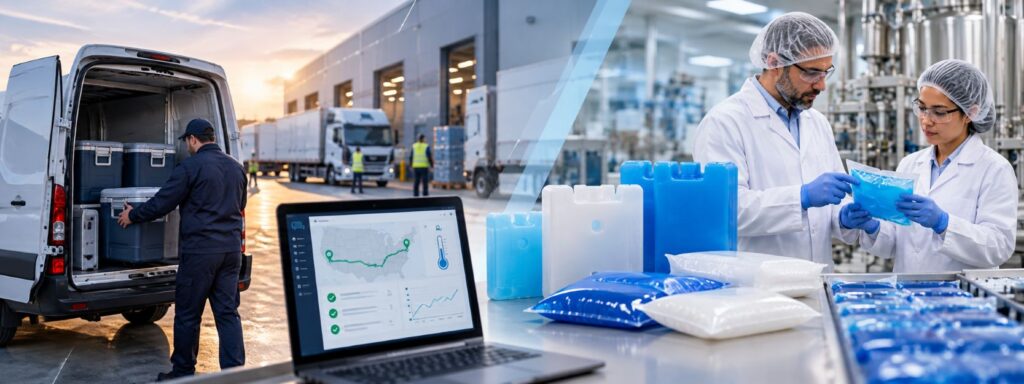
What will pharma cold-chain leaders be talking about at LogiPharma USA 2026? Akuratemp is heading to Boston with two focused conversations: helping 3PL organizations improve cold-chain visibility, asset utilization and custody evidence through Akurasense®, and helping temperature-controlled packaging manufacturers strengthen PCM supply with savENRG®.
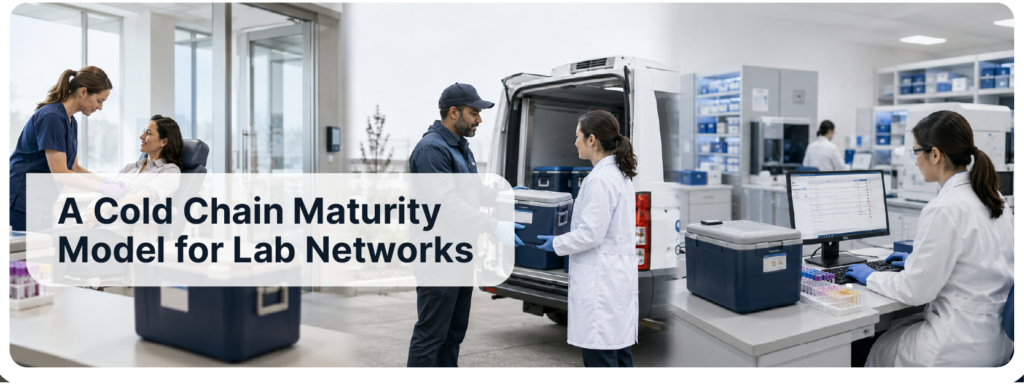
Most lab networks do not begin with a cold-chain operating model. They begin with practical needs. A collection site needs specimens picked up. A courier route needs a temperature-controlled tote and a logger. A lab adds a shipping SOP. A customer asks for proof of control. A compliance team wants […]
In diagnostic logistics, cold chain risk rarely starts with one dramatic failure. It usually starts with small moments that are easy to miss. For clinical laboratories, courier networks, and healthcare logistics teams, these moments are not just cold chain issues. They are operational issues. They affect timely diagnostics, specimen integrity, […]