Building a More Resilient Pharma Cold Chain Through Visibility, Supply and Partnerships
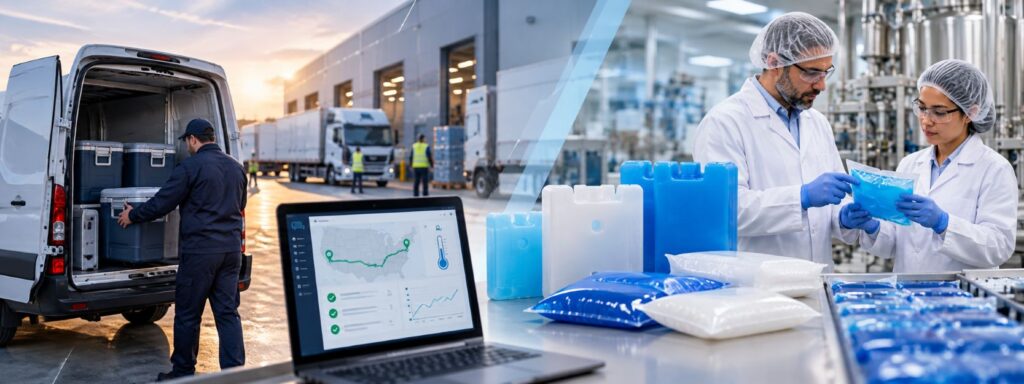
The pharmaceutical supply chain is being asked to do something increasingly difficult: protect increasingly sensitive products while controlling cost, maintaining compliance, and becoming more resilient to disruption.
That is why the conversation around the cold chain has changed.
It is no longer simply about finding the right shipper, adding a temperature logger, or selecting a logistics provider.
It is about how packaging, materials, transportation, monitoring, shipment visibility, traceability, compliance and technology work together as one operating system.
That conversation will be very much in focus at LogiPharma USA 2026, taking place October 5–7 at the Sheraton Boston in Boston, Massachusetts.
The event brings together senior pharma, biotech and medtech supply-chain leaders around themes including resilience, visibility, compliance, innovation and supply-chain transformation.
For Akuratemp®, these are not separate conversations.
They are all connected by one question:
How do you make the physical cold chain more reliable without making it more expensive or more complicated to operate?
That is the conversation our experts are looking forward to having in Boston.
The economics of cold chain are getting harder to ignore
Cold-chain packaging has always been an important cost consideration. But in today’s environment, procurement teams have more variables to manage.
Fuel and transportation costs matter. Material costs matter. Packaging utilization matters. Return logistics matter. Conditioning labor matters. Asset availability matters.
And these costs do not operate independently.
As of September 14, 2026, the U.S. Energy Information Administration reported average retail diesel at $6.285 per gallon, compared with $3.872 per gallon at the beginning of January. That is a substantial change in the operating environment for temperature-controlled transportation and logistics.
Material markets are also moving. The U.S. Bureau of Labor Statistics reported that, over the 12 months ending August 2026, the Producer Price Index for final demand increased 5.4%; its August data also showed year-over-year movement in categories including plastic resins and materials and plastic packaging products.
For pharma logistics organizations, those pressures can show up in transportation, handling, packaging and the cost of responding to exceptions.
For packaging manufacturers, the pressure is even more direct. PCM is a core component of many passive temperature-controlled packaging systems, so material availability, qualification, processing requirements and total packaging cost all matter.
That is why Akuratemp is bringing savENRG® PCM into the LogiPharma conversation—not simply as another PCM option, but as a potential domestic supply partner for packaging manufacturers looking to qualify, scale and secure critical PCM inputs.
The question to ask:
What does this cold-chain solution cost me to operate across its entire lifecycle?
That includes material consumption, packaging configuration, conditioning, transportation, reuse, return logistics, asset availability and the operational cost of exceptions.
This is where Akuratemp® can bring a different perspective to the conversation.
We work with healthcare and life-science organizations to develop validated temperature-controlled packaging around the actual operating requirement—temperature range, duration, route, payload, reuse model and workflow.
And because Akuratemp® operates from a U.S. production facility in North Carolina, we can also support customers looking for a domestic manufacturing and supply relationship rather than relying entirely on offshore supply. Our products are designed and assembled through its U.S. production facility, with ISO 9001:2015 certification covering its quality management system.
Securing the materials that keep the cold chain moving
There is another question that is often overlooked until something goes wrong:
Supply resilience is becoming a packaging decision. Can you actually get the materials you need when you need them?
Cold-chain resilience is not only about surviving a disruption during transportation.
It starts much earlier.
A resilient cold chain starts before a shipment leaves the facility. If a critical packaging material is difficult to source, dependent on a single supplier or difficult to scale, the risk eventually reaches the customer.
Akuratemp manufactures water-based, non-toxic and non-flammable savENRG® phase change materials in North Carolina. The product line covers four temperature ranges—-26°C, -10°C, +5°C and +22°C—and is available in bulk 1,000-liter IBC totes as well as flexible and rigid encapsulated formats.
For temperature-controlled packaging manufacturers, this creates a conversation around more than temperature performance. It is also about domestic supply, qualification, scalability and the material and processing implications of the packaging design. Because the PCM is water-based, Akuratemp’s outreach messaging highlights the potential to eliminate laminated film in flexible packaging and fluorination in HDPE rigid encapsulation, which can reduce material and processing costs depending on the packaging design.
If a critical packaging component, PCM configuration, insulated container or replacement asset is unavailable, the transportation plan can be disrupted before the shipment even leaves the facility.
That is particularly important for pharmaceutical organizations supporting recurring distribution programs, clinical trials, specialty therapies and temperature-sensitive products where packaging is not an occasional purchase—it is part of the operating infrastructure.
You may already have the sensors you need
Another conversation we expect to have at LogiPharma is about visibility.
Pharma companies have invested heavily in sensors and monitoring technology. The question increasingly is not:
“Do we have a sensor?”
It is:
“Can we turn the data from our existing sensors into a consistent operating view?”
This distinction matters.
Your organization may have different sensor technologies across packaging, refrigerated vehicles, storage equipment, couriers and logistics partners.
Replacing all of that infrastructure simply to create a common visibility layer can be expensive and operationally disruptive.
A sensor-agnostic approach offers another path.
Akurasense®, our Cold Chain Operational Intelligence Platform is designed to connect different sensor and connectivity environments into a common cold-chain operational layer. Akuratemp describes the platform as supporting different sensor connectivity requirements, including Bluetooth, 4G and Wi-Fi, as well as integrations through APIs and Webhooks and supported OEM sensor suppliers.
Key Benefits of Akurasense:
- END-TO-END VISIBILITY – Unifies temperature, location, custody, and workflow data across mobile and fixed assets.
- EXCEPTION CONTROL -Asset- and workflow-specific thresholds with automated notification and closure capture.
- ASSET LIFECYCLE – Digitized tracking of utilization, custody, availability, and return-to-service status.
- PROOF OF CUSTODY – Auto-links handoffs, temperature, location, and user actions into a single trip record.
- MULTI-SITE STANDARDIZATION – Configurable digital workflows per asset type — thresholds, responsibilities, closure rules.
- PERFORMANCE ANALYTICS – Pattern and root-cause analytics across temperature, dwell, handoff, and exception data — paired with Optimyz℠.
For a 3PL, the outcome is a more connected record of temperature, time, location, asset and custody events—giving operations teams better evidence to investigate exceptions, respond to customers and improve recurring workflows.
From tracking a shipment to understanding the cold chain
Visibility also needs to go beyond simply showing where a shipment is.
The World Health Organization describes traceability systems as a way to trace medical products through the supply chain and strengthen near-real-time monitoring of product integrity.
But physical location is only one part of cold-chain assurance.
For temperature-sensitive products, organizations also need to understand the conditions under which products were stored and transported.
USP General Chapter <1079.3>, for example, addresses monitoring devices for time, temperature and humidity during pharmaceutical storage and transportation. USP also notes that transportation conditions can affect product stability and degradation.
For 3PL organizations managing temperature-sensitive pharma shipments, the operational question is rarely just “Where is the shipment?”
The more useful questions are: Which asset is carrying it? What condition is that asset in? Who has custody? What happened at each handoff? Is the asset being utilized effectively? And can the 3PL produce defensible evidence when a customer asks what happened?
That is why Akurasense® is designed around more than shipment location.
The platform connects temperature, time, location, asset and workflow information, creating an operational record around the cold-chain asset and its journey. It can also connect events with actions and users to support a more defensible record of what happened.
And this is an important distinction:
Akurasense is not simply a specimen-tracking system or a courier route-optimization system.
It is designed to provide visibility into the performance and custody of the assets that move and store temperature-sensitive products.
That asset-first view becomes particularly important as 3PLs manage mixed fleets and customer requirements. A reusable courier tote, parcel shipper, refrigerated vehicle or other cold-chain asset can have different performance, custody and workflow requirements. Treating every movement as only a shipment-tracking problem leaves part of the operating picture invisible.
Compliance should be built into the workflow
For pharma supply chains, compliance cannot be an afterthought.
But it also should not require teams to create a mountain of paperwork every time a shipment moves.
The U.S. regulatory environment already places significant emphasis on traceability and secure movement of pharmaceutical products. The FDA’s Drug Supply Chain Security Act framework is designed around interoperable electronic identification and tracing of certain prescription drugs at the package level.
Temperature control introduces another layer of operational responsibility.
USP’s transportation guidance emphasizes understanding the environments through which products move and considering factors such as transportation mode, insulation, door usage, geography, season, transportation time and delays when evaluating transportation-lane temperature risk.
For 3PLs, defensible custody and monitoring records can support customer conversations, exception investigations and controlled operating processes. For packaging manufacturers, validated PCM performance and controlled material supply contribute to the evidence needed to qualify and maintain packaging systems.
In both cases, the goal is practical: make the right evidence easier to capture, connect and use.
Akurasense® can capture time-stamped temperature information, alerts, actions, location context and asset information as part of the operating workflow, supporting automated reporting and more consistent evidence.
The next cold-chain advantage may come from partnerships
One of the most interesting developments in the cold-chain technology landscape is that no single technology necessarily needs to do everything.
- Packaging companies understand thermal performance.
- Sensor companies understand measurement.
- Connectivity providers understand data transmission.
- Logistics providers understand transportation.
- Pharma companies understand product requirements, quality systems and patient impact.
- The opportunity is to make these capabilities work together.
That is the philosophy behind Akurasense’s sensor-agnostic architecture.
Instead of asking customers to abandon every existing sensor or monitoring technology, Akuratemp can work toward creating a common operational visibility layer across different hardware environments.
Akuratemp’s current platform supports integration with different OEM sensor suppliers and connectivity approaches, allowing organizations to build visibility around the infrastructure they already have.
Meet the Akuratemp team in Boston
Our experts will be at LogiPharma USA 2026 in Boston, October 5–7, ready to have exactly these conversations.
If you are responsible for pharmaceutical supply chain, logistics, distribution, packaging, quality or cold-chain operations, we would like to understand what is creating the most pressure in your network.
- You may be evaluating packaging costs.
- You may be concerned about material availability.
- You may already have several sensor technologies but lack a unified operational view.
- You may be looking for better evidence around temperature and custody.
- Or you may simply be looking for a partner who can bring thermal packaging, monitoring, traceability and operational expertise together.
Let’s talk before the event.
Schedule a Consultation
A short conversation before LogiPharma can help us understand your priorities and make an in-person meeting in Boston much more productive.
Connect with Keith Miller & Harshul Gupta and Schedule a pre-event consultation with the Akuratemp team, and let’s identify where we can help strengthen your pharma cold-chain operation—whether through validated U.S.-manufactured packaging, sensor-agnostic visibility, supply continuity, compliance-supporting evidence, or technology partnerships.
Then let’s continue the conversation face-to-face at LogiPharma USA 2026.
FAQs
Pharmaceutical cold chain is the controlled storage, handling and transportation of temperature-sensitive pharmaceutical products within their required temperature conditions. It involves temperature-controlled packaging, monitoring, logistics processes, storage infrastructure and documented evidence of handling and transport.
A pharmaceutical 3PL is a third-party logistics provider that manages logistics activities such as storage, transportation, fulfillment or distribution for pharmaceutical companies. For temperature-sensitive products, 3PLs also need appropriate cold-chain packaging, monitoring, asset management and evidence of handling.
Phase change materials (PCM) are thermal materials that absorb or release heat as they change phase, helping maintain a defined temperature range inside temperature-controlled packaging. Different PCM formulations are designed around different target temperature ranges.
Akurasense connects cold-chain monitoring with asset lifecycle tracking, custody records and workflow evidence, helping 3PL teams improve visibility into temperature-sensitive shipments and the assets supporting them.
No. Akurasense is designed to be sensor-agnostic, allowing organizations to connect supported OEM sensors and existing monitoring infrastructure rather than requiring a single sensor technology.
Akuratemp’s outreach materials identify savENRG® PCM products across -26°C, -10°C, +5°C and +22°C, with availability in bulk IBC, flexible and rigid encapsulated formats.
Akuratemp’s water-based PCM is manufactured at its facility in North Carolina, supporting a domestic supply proposition for packaging manufacturers.